Guides · Jensen Beach, Florida
The History of Jensen Beach in 6 Landmarks
The pineapple that built this town has been gone for a century. The turtles that return to its beach every summer have not.
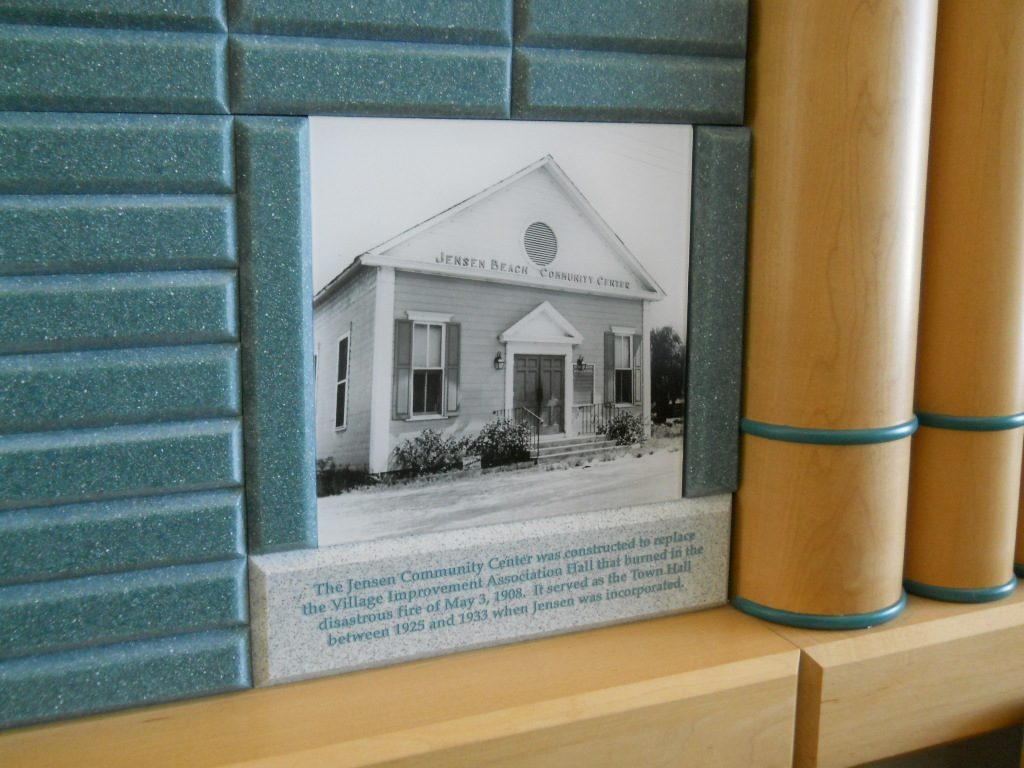
The Founder’s Plantation
John Laurence Jensen was a Danish immigrant with a stubborn idea. In 1881 he planted a pineapple plantation on this stretch of Florida’s east coast, and the town grew out of that sandy field. Not around it. Out of it. The name on the map is his—Jensen, the Dane who gambled on a tropical fruit in a subtropical climate.
The streets that now hold 12,456 people trace their grid to his agricultural claim. When you drive through the residential blocks west of the lagoon, you are moving through what was once a single man’s crop. The geometry of the town is still agricultural.
The Pineapple Capital of the World
By 1895, Jensen was not a village with a crop. It was the Pineapple Capital of the World. In the June and July season alone, growers here shipped more than a million boxes a year. That number is almost impossible to square with the quiet, mid-sized town that sits here now.
The Florida East Coast Railway reached Jensen by 1894. That was the enabling act. Before the tracks, pineapples were perishable promises. After the tracks, growers could load freight directly and move the fruit to northern markets in days, not weeks. The railroad made the boom possible, and the boom made the town.
Then the boom broke.
The Freeze and the Fire
A severe freeze hit in 1895. It did not kill the industry outright, but it wounded it. Fires followed in 1908 and 1910. Mounting debt finished the job. By 1920, the pineapple fields were gone. Not diminished. Gone. The growers turned to citrus, which was more forgiving, and the town turned to something else entirely.
Here is the elegiac fact: a million boxes a year in 1895. Nothing at all by 1920. That is a 25-year arc from world capital to footnote. The houses and the roads stayed. The fruit did not.
The Indian River Lagoon
The town’s eastern edge is defined by the Indian River Lagoon, the broad, shallow estuary that runs parallel to the Atlantic. It was the highway before the railway. It was the reason Jensen’s plantation had a port at all. Today it is the town’s constant, the body of water that never left when the industry did.
The lagoon is also the reason the town’s median age is 54.5 years. People come here to retire near the water. They buy one of the 7,179 housing units, many of which sit empty for much of the year—633 homes are held for seasonal or recreational use, and 1,289 are vacant entirely. The winter population is not the census population. It never was.
Jensen Sea Turtle Beach
The living half of the story is at the beach. Jensen Sea Turtle Beach is a nesting ground for loggerhead, leatherback and green sea turtles. Every summer, the females haul themselves up the sand and lay eggs in the same dunes where pineapples never grew.
The beach is barricaded in sections through the nesting season. Wooden stakes and tape mark the nests. You cannot walk everywhere you want to, and that is the point. The town has chosen to cede part of its shoreline to animals that have been coming here longer than the Danes.
Here is the present-tense truth: the turtles are not a relic. They are the ongoing industry. The pineapples are a museum exhibit; the turtles are a live performance, every single season.
The Town After the Fruit
The census numbers tell a specific story. Median household income is $63,397. Median home value is $363,100. Median gross rent is $1,227. Unemployment is 3.8 percent. Nearly 37 percent of residents hold a bachelor’s degree or higher.
This is not a plantation town anymore. It is a post-industrial coastal town that replaced agriculture with amenity. The people who live here full-time are older, better educated, and comparatively comfortable. The people who visit come for the water, not the harvest.
But the history is not buried. It is in the name of the town, in the shape of the lots, in the railway easement that still runs through the county. Jensen built a town on a single crop, watched it die in a generation, and then built another town on the wreckage. That second town has lasted longer than the first.
The Beach as the Final Landmark
The six landmarks are really one story told six ways. The plantation started it. The railway accelerated it. The freeze and fires ended it. The lagoon persisted. The beach now hosts a different kind of seasonal visitor. And the town itself—the census, the rooftops, the year-round residents—is the monument to everything that came after.
The turtles arrive in June and July, the same months the pineapples used to ship. That is not coincidence. That is the rhythm of this place, unchanged at the edges, completely transformed in the middle.
A million boxes a year. Nothing at all by 1920. And now: loggerheads in the sand, retirees on the porches, and a town that keeps the name of a Dane who got it right for a quarter century.
Every business named above is one we hold a listing for, and every date traces to a source on our sources page. We do not describe menus, interiors or service we have not verified. Details change — confirm before you travel.