Guides · Jensen Beach, Florida
Wintering in Jensen Beach: History, Turtles & Quiet
Jensen Beach wears its history like a faded photograph: the name of a Danish farmer who planted pineapples in 1881, a boom that made it the Pineapple Capital of the World by 1895, and then a silence that settled by 1920. What remains is quieter—a shoreline where ancient turtles still crawl ashore to nest, and a town that has learned to live with what the past left behind.
The Pineapple Capital's Rise and Fall
John Laurence Jensen, a Danish immigrant, planted a pineapple plantation here in 1881, and the town grew from his name and his crop. For a brief, bright moment, Jensen Beach was the center of the pineapple world. By 1895, the town shipped more than a million boxes a year in the June and July season, earning the title Pineapple Capital of the World. The Florida East Coast Railway reached the town by 1894, letting growers load freight direct, and the industry expanded with the speed of a summer storm.
Then it collapsed. A severe freeze in 1895, fires in 1908 and 1910, and mounting debt finished the industry by 1920. Growers turned to citrus, but the pineapples never returned. The name stuck, but the crop did not. Today, the town carries its founder's name—Jensen, the Dane who planted the first pineapples—and little else from that era except the memory of a boom that evaporated faster than it began.
The Railroad's Legacy in Jensen Beach
The Florida East Coast Railway's arrival in 1894 was the hinge on which the town's fate turned. It allowed growers to ship freight directly, making the million-box seasons possible. But the same rail line that carried prosperity out also carried the means of its end—when the freeze hit in 1895, the industry was already stretched thin, and the fires that followed in 1908 and 1910 burned what remained. By 1920, the tracks that had once moved pineapples were moving citrus instead.
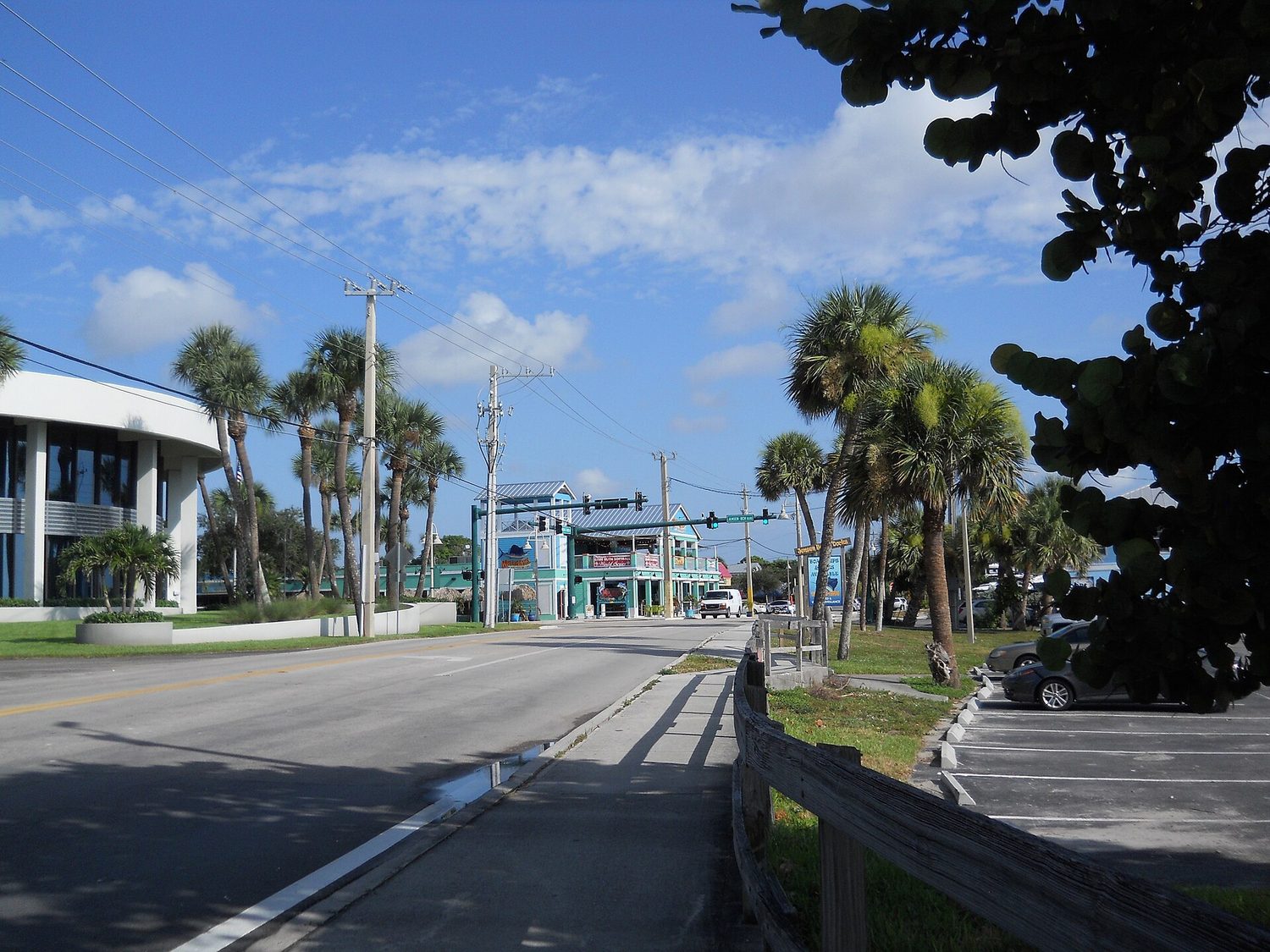
What remains of that era is not a preserved depot or a museum street, but the town's layout itself—a quiet, residential character that never grew into a bustling port. The railroad's legacy is the town's shape: a place that boomed, busted, and settled into a slower rhythm. Visitors looking for a historic downtown will not find one; the charm is in the absence of that boom, in the space where the industry used to be.
Sea Turtles: Jensen Beach's Living Legacy
The real legacy of Jensen Beach is not in the ground but on the sand. Jensen Sea Turtle Beach is a nesting ground for loggerhead, leatherback, and green sea turtles, and through the nesting season, sections of the beach are barricaded to protect the nests. The turtles come ashore in the dark, lay their eggs, and return to the sea—a cycle that predates the pineapple plantation and will outlast the town's name.
The town's identity has shifted from agriculture to conservation. The beach is not a spectacle; it is a sanctuary, and the barricades are a reminder that the turtles come first. For visitors, the experience is less about seeing turtles up close and more about witnessing the evidence of their presence—tracks in the sand, marked nests, the careful, quiet respect that the town has adopted as its own.
What Wintering in Jensen Beach Is Like
Jensen Beach is, in large part, a seasonal town. Of its 7,179 total housing units, 633 are held for seasonal or recreational use, and 1,289 sit vacant. The median age is 54.5 years, and the median household income is $63,397. The unemployment rate is 3.8 percent, and 36.6 percent of residents hold a bachelor's degree or higher. The median home value is $363,100, and the median gross rent is $1,227.
For winter visitors, this means quiet. The town does not pulse with year-round energy; it breathes more slowly in the off-season, and the vacant homes are a sign of that rhythm. If you come for the winter, you are part of a pattern that the town already knows—a seasonal presence that fits the landscape.
Indian River Lagoon and Nearby Day Trips
The Indian River Lagoon runs along the town's eastern edge, offering a different kind of water than the open beach—shallow, brackish, and full of life. It is a place for kayaking, fishing, or simply watching the light change over the water. The lagoon is the town's second shoreline, less dramatic but no less essential.
For those who want more than beachcombing, nearby towns offer their own rhythms. Stuart, just 3 miles away, hosts the Stuart Boat Show and has a more developed downtown. Okeechobee, 41 miles west, holds the Speckled Perch Festival and Parade. Sebastian, 41 miles north, offers the Sebastian Clambake Lagoon Festival. Arcadia, 112 miles away, runs the Arcadia All-Florida Championship Rodeo. Oviedo, 118 miles north, celebrates with Great Day in the Country, and Everglades City, 124 miles south, hosts the Everglades Seafood Festival.
Jensen Beach by the Numbers
| Indicator | Value |
|---|---|
| Population | 12,456 people |
| Total housing units | 7,179 units |
| Homes held for seasonal or recreational use | 633 units |
| Vacant housing units | 1,289 units |
| Median age | 54.5 years |
| Median household income | $63,397 |
| Median home value | $363,100 |
| Median gross rent | $1,227 |
| Bachelor's degree or higher | 36.6 percent |
| Unemployment rate | 3.8 percent |
The pineapple capital is a memory, but the turtles are a fact. Jensen Beach winters well for those who want a place where the past is present but not loud—a town that once shipped a million boxes of fruit and now guards a stretch of sand where ancient creatures still return. The name remains, and so does the beach. That is enough.
Common questions
- Why is Jensen Beach called the Pineapple Capital?
- By 1895, Jensen shipped over a million boxes of pineapples a year in the June-July season, earning that title. The industry collapsed by 1920 due to a severe freeze in 1895, fires in 1908 and 1910, and mounting debt, after which growers turned to citrus.
- What happened to the pineapple industry here?
- The Florida East Coast Railway arrived by 1894, boosting shipments. But a severe freeze in 1895, fires in 1908 and 1910, and mounting debt finished the industry by 1920. Growers then switched to citrus, leaving the pineapple legacy behind.
- Can I see sea turtles nesting in Jensen Beach?
- Yes. Jensen Sea Turtle Beach is a nesting ground for loggerhead, leatherback, and green sea turtles. During nesting season, sections of the beach are barricaded to protect nests, so you can observe from a distance without disturbing them.
- What's the town's history with its founder?
- John Laurence Jensen, a Danish immigrant, planted a pineapple plantation here in 1881, and the town grew from it. The town carries his name—Jensen, the Dane who planted the first pineapples—making the past present in its very identity.
- Is Jensen Beach a good place to live or retire?
- With a median age of 54.5 and median home value of $363,100, it skews older and pricier. The unemployment rate is low at 3.8%, and 36.6% hold a bachelor's degree or higher. Median household income is $63,397, with 633 homes held for seasonal use.
- What is the Indian River Lagoon like here?
- The Indian River Lagoon runs along Jensen Beach's eastern edge, offering a calm, brackish waterway ideal for boating, fishing, and wildlife viewing. It's a living counterpoint to the town's faded pineapple glory, where turtles still nest on the shore.
Every business named above is one we hold a listing for, and every date traces to a source on our sources page. We do not describe menus, interiors or service we have not verified. Details change — confirm before you travel.