Guides · Jensen Beach, Florida
Museums and Historic Sites in Jensen Beach
The turtles arrive first, and they have always known the shore better than we have.
Jensen Beach is a town built on a fruit that no longer grows here. John Laurence Jensen, a Danish immigrant, planted a pineapple plantation in 1881, and the town grew from it. By 1895, this stretch of Martin County was the Pineapple Capital of the World, shipping more than a million boxes a year in the June and July season. The Florida East Coast Railway reached the town by 1894 and let growers load freight direct. Then came a severe freeze in 1895, fires in 1908 and 1910, and mounting debt. By 1920, the industry was finished. The growers turned to citrus. The name stayed.
The past is not hidden here. It is posted on the roadside and set behind glass. The Stuart Welcome Arch, at 2390-2398 NE Dixie Hwy, carries a perfect 5.0 rating from 14 reviews, and it does exactly what its name promises. It is a threshold, not a museum. You drive under it and you are in the story, whether you meant to be or not. It is the town’s oldest gesture of self-regard, and it remains the most honest.
For the actual objects, the Children's Museum of the Treasure Coast and The Mansion at Tuckahoe share an address at 1707 NE Indian River Dr. They are listed together as museums and history sites, and they are the two poles of Jensen Beach’s memory. The Children's Museum, rated 4.5 from 1145 reviews, is the louder half. It is hands-on, built for the people who will inherit the town’s next century. The Mansion at Tuckahoe, rated 4.8 from 430 reviews, is the quieter one. It holds the rooms and the walls. Together, they form a single argument: the town is not just a place to live. It is a place to be shown.
Down at 432 E Intercoastal Dr, Jack's Reef is the least-reviewed of the four—4.5 from 8 reviews—and the most specific. It is a reef, named for a man, sitting in the water where the Indian River Lagoon runs along the town’s eastern edge. It is not a building. It is a landmark with a name, which is its own kind of history. You do not need a plaque to know that something happened here.
The numbers tell the rest. Jensen Beach has 12,456 people and 7,179 housing units. Of those, 633 are held for seasonal or recreational use. Another 1,289 sit vacant. The median age is 54.5 years. This is not a young town. It is a town where people come to stay, or come to rest. The median home value is $363,100, and the median gross rent is $1,227. The median household income is $63,397. The unemployment rate is 3.8 percent. Over a third of residents hold a bachelor’s degree or higher—36.6 percent, to be exact. These are not the numbers of a boomtown. They are the numbers of a place that has settled into itself.
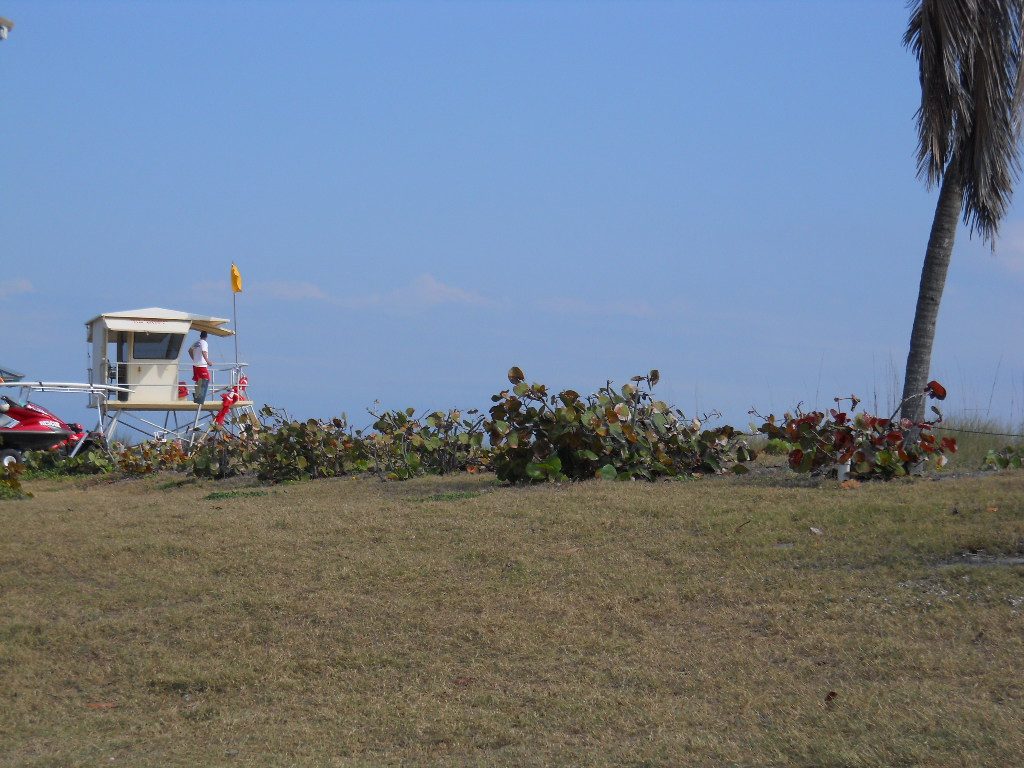
What the census does not count is the other population. Jensen Sea Turtle Beach is a nesting ground for loggerhead, leatherback, and green sea turtles. Through the nesting season, sections of the beach are barricaded. The turtles are the living half of the story. The pineapple fields are gone. The railway is gone. The growers are gone. But every summer, the turtles return to the same sand, and the town cordons off their path. That is a form of preservation that no museum can match.
The four sites you can visit—Stuart Welcome Arch, the Children's Museum of the Treasure Coast, The Mansion at Tuckahoe, and Jack's Reef—do not add up to a complete history. They are fragments. That is appropriate. Jensen Beach is a town of fragments: a Danish name, a vanished crop, a reef, an arch, a beach under guard. None of it is a hidden gem. None of it is paradise. It is simply a place where the past is not finished, and the turtles are the proof.
Every business named above is one we hold a listing for, and every date traces to a source on our sources page. We do not describe menus, interiors or service we have not verified. Details change — confirm before you travel.