Guides · Jensen Beach, Florida
The Beaches of Jensen Beach
The beaches here run south in a clean line, and the town behind them is the leftover of a dream that failed on schedule.
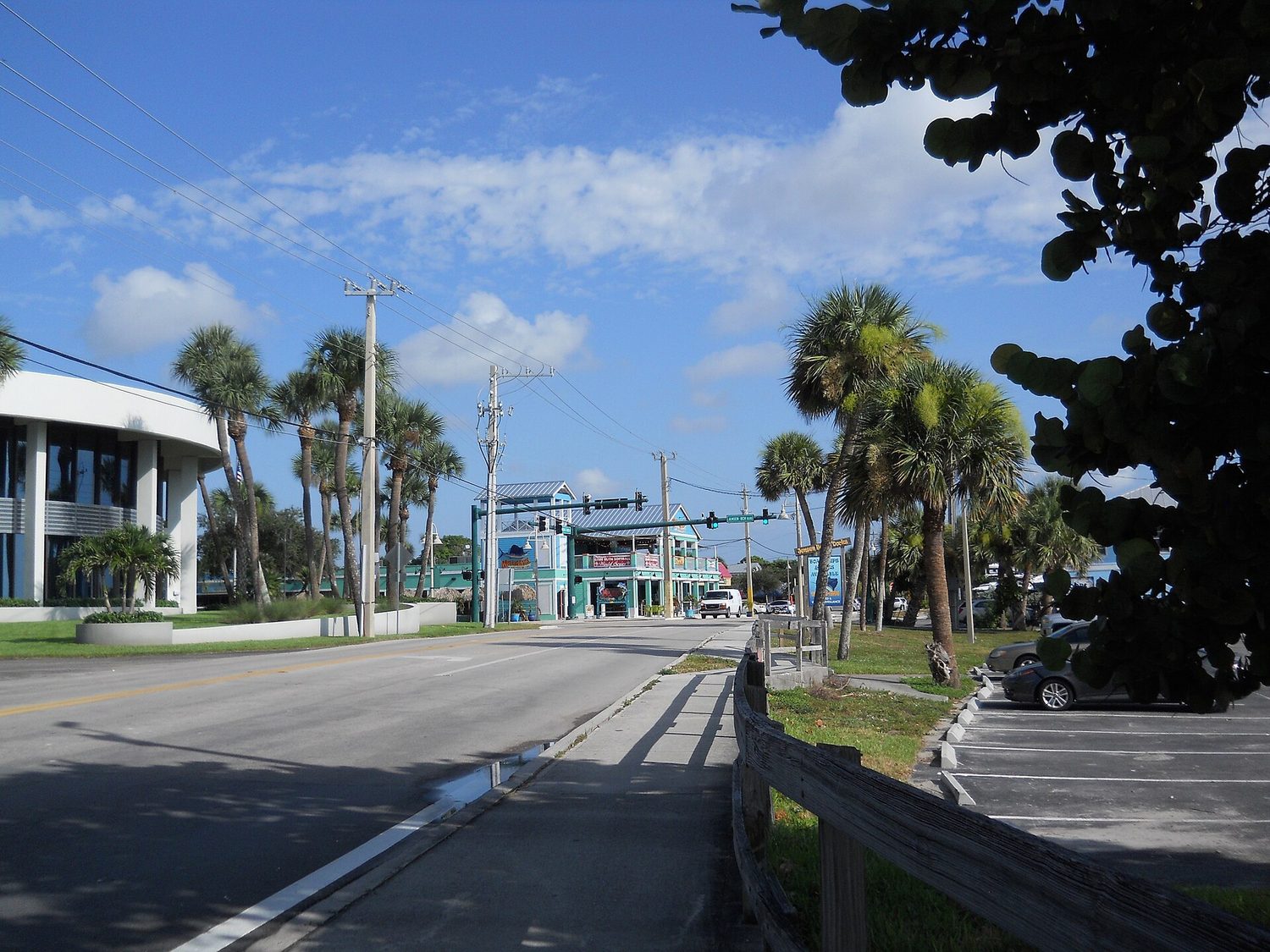
The Water's Edge
Jensen Beach does not pretend to be what it was. John Laurence Jensen, a Danish immigrant, planted a pineapple plantation here in 1881, and the town grew from it. By 1895, this was the Pineapple Capital of the World, shipping more than a million boxes a year in the June and July season. The Florida East Coast Railway reached the town by 1894 and let growers load freight direct. Then came a severe freeze in 1895, fires in 1908 and 1910, and mounting debt. By 1920, it was over. Pineapples, then nothing. Growers turned to citrus, and the town kept its founder's name—Jensen, the Dane who planted the first pineapples.
The beach does not care about any of that.
Walton Rocks Beach / Dog Park
Walton Rocks Beach / Dog Park sits at 6700 S Ocean Dr, the southernmost of the three, and it is the busiest by far. Rated 4.7 from 1086 reviews, it earns its numbers with a simple math: sand, surf, and room for the dogs. The name says it plainly. This is the one where people bring their animals early and let them tear across the wet sand. It is not quiet, and it should not be. The reviews are consistent, which is rare for a beach with that many of them.
The Middle Stretch
North of Walton Rocks, the road keeps running. Herman's Bay Beach at 7880 S Ocean Dr is a smaller operation—rated 4.6 from 167 reviews—and it feels like it. Fewer people, less noise. The bay side of the name matters; the Indian River Lagoon runs along the town's eastern edge, and this spot catches some of that calmer water. It is the beach you take when you want the sun without the crowd, and the rating holds up even with a fraction of the reviews.
Then comes Normandy Beach at 8550 S Ocean Dr, rated 4.7 from 146 reviews. The name is a strange transplant for a Florida shoreline, but the beach itself is straightforward. It is the northernmost of the three, and it shares the same Atlantic water, the same pale sand, the same steady wind. What distinguishes it is simply being there, a little further from the parking lots, a little further from the noise.
The Other Residents
Here is the part that matters. Jensen Sea Turtle Beach, which overlaps these sands, is a nesting ground for loggerhead, leatherback and green sea turtles. Through the nesting season, sections are barricaded off. The turtles are the living half of the story. They come ashore at night, dig, lay, and leave. The barricades are the town's apology for what the pineapples did—not that the turtles know or care.
The town itself is small. 12,456 people, with a median age of 54.5 years. That number tells you something: this is not a spring break town, and it is not trying to be. 633 of 7,179 housing units are held for seasonal or recreational use, and 1,289 sit vacant. People come for a season, maybe two. The median home value is $363,100, and the median gross rent is $1,227. A third of the adults hold a bachelor's degree or higher. Unemployment is 3.8 percent. It is a place that works, quietly.
What Remains
The beaches are not monuments. There is no plaque for the million boxes of pineapples shipped from these docks. The railway is gone, the plantations are gone, and the industry that gave the town its nickname is a footnote. What remains is the water, the sand, and the turtles that outlasted every crop.
Go to Walton Rocks Beach / Dog Park if you want the energy. Go to Herman's Bay Beach if you want the lagoon. Go to Normandy Beach if you want the walk. But go knowing the town behind you is a memory of a boom that burned out by 1920, and the only thing that kept coming back, year after year, is the one that does not need a name.
The turtles are still here. That is the whole story.
Every business named above is one we hold a listing for, and every date traces to a source on our sources page. We do not describe menus, interiors or service we have not verified. Details change — confirm before you travel.