Guides · Jensen Beach, Florida
Jensen Beach's Pineapple Industry: Rise and Fall
Pineapple Capital earned its title through a million boxes a year, then lost it all to freeze, fire, and debt—today the same shore that shipped the fruit marks time by the return of sea turtles.
How Jensen Beach Became the Pineapple Capital
John Laurence Jensen, a Danish immigrant, planted a pineapple plantation here in 1881, and the town grew from it. The town carries its founder's name—Jensen, the Dane who planted the first pineapples. By 1895, the place was called the Pineapple Capital of the World, shipping more than a million boxes a year in the June and July season.
The Florida East Coast Railway reached the town by 1894 and let growers load freight direct. That rail link turned a local crop into a global commodity—pineapples, then nothing. A severe freeze in 1895, fires in 1908 and 1910, and mounting debt finished the industry by 1920, after which growers turned to citrus.
Jensen Beach Today: A Town That Outlived Its Pineapple Boom
The shift from pineapple to citrus was quiet and practical. Growers didn't abandon the land; they changed what it bore. The name stayed. Jensen Beach kept its founder's surname and its title—Pineapple Capital—though no one ships a single box from the old docks.
The current census tells the story of a place that outlived its founding crop. The median age is 54.5 years. Some 36.6 percent of residents hold a bachelor's degree or higher. There are 1,289 vacant housing units out of 7,179 total—a sign of a town that swells and contracts with the season. The median household income sits at $63,397, unemployment at 3.8 percent. These are numbers of stability, not boom.
The Indian River Lagoon: From Shipping Route to Ecological Backbone
Before the railway, the lagoon was the shipping route. Growers loaded pineapples onto boats that moved down the Indian River Lagoon along the town's eastern edge, connecting Jensen to wider markets. When the railroad arrived in 1894, the lagoon's role shifted from commercial artery to backdrop.
Now it is the ecological spine of the town. The same water that carried the boxes supports the shore and the life that returns to it. The lagoon frames both the historical economy and the present-day landscape—a constant presence that outlasted the industry it once served.
Sea Turtle Nesting on Jensen Beach: A New Seasonal Rhythm
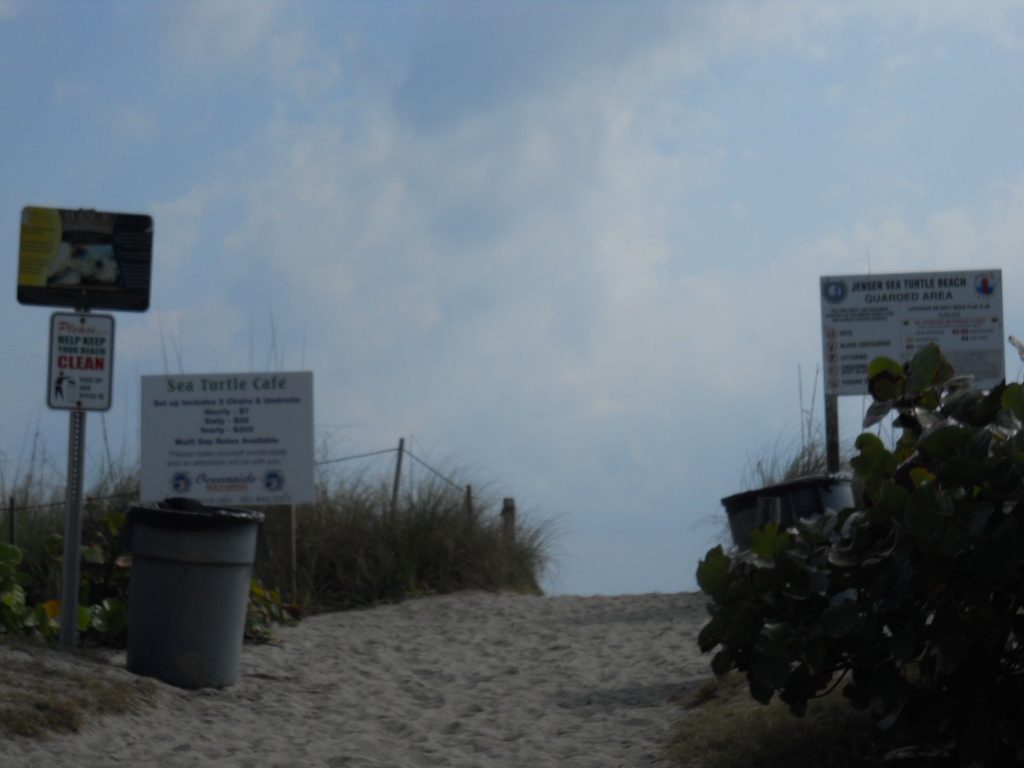
The living half of Jensen's story is on the beach. Jensen Sea Turtle Beach is nesting ground for loggerhead, leatherback, and green sea turtles. Each nesting season, sections are barricaded to protect the nests. The turtles return to the same shore where the pineapple industry died—a cycle that replaces the harvest as the town's seasonal rhythm.
The barricades are not decoration. They are the new infrastructure of the beach, marking where life begins rather than where cargo was loaded.
Jensen Beach's Housing and Demographics: A Seasonal Community
The census figures sketch a place that runs on a different clock than the boom years. Of the 7,179 total housing units, 633 are held for seasonal or recreational use. The median home value is $363,100; median gross rent is $1,227. With a population of 12,456 and a median age of 54.5, this is a town of retirees, second homes, and unhurried months.
The unemployment rate of 3.8 percent and the 36.6 percent with college degrees suggest a workforce that isn't tied to a single crop or season. The vacant units—1,289 of them—speak to a rhythm of arrival and departure, but not the frantic June and July rush of 1895.
What Remains of Jensen Beach's Pineapple Legacy
Jensen Beach carries its founder's name and a vanished title. The Pineapple Capital of the World is a historical fact, not a current description. The fruit is gone; the name remains. What marks time now is not the harvest but the turtles—loggerhead, leatherback, and green—returning to the same shore, season after season, to nest behind the barricades.
The town outlived its founding crop, and in doing so found a different kind of continuity. The water that carried the boxes now frames the beach where the turtles arrive. The railway that made the boom possible is a footnote. The name persists, even as the industry it commemorates has dissolved into the sand.
| From Pineapples to Turtles: Two Seasons of Jensen Beach | |
|---|---|
| Then (1895–1920) | Now |
| Million-box harvests each June and July | Nesting seasons marked by barricaded beach sections |
| Pineapple Capital of the World | A town of 12,456, median age 54.5 |
| Freeze, fires, and debt end the industry by 1920 | Citrus, second homes, and a 3.8% unemployment rate |
| Railway freight direct to market | Loggerhead, leatherback, and green sea turtle nests protected by sections |
| The lagoon as a shipping route | The lagoon as the ecological spine of the town |
Common questions
- Why is Jensen Beach called the Pineapple Capital?
- In 1895, the town shipped over a million boxes of pineapples a year in the June and July season, earning the title Pineapple Capital of the World. John Laurence Jensen, a Danish immigrant, planted the first plantation here in 1881, and the industry grew from that.
- What happened to the pineapple industry in Jensen Beach?
- A severe freeze in 1895, fires in 1908 and 1910, and mounting debt killed it by 1920. Growers then switched to citrus. The railroad that arrived in 1894 helped early growth, but it couldn't save the crop from those disasters.
- Are there still pineapples grown here?
- No, by 1920 the pineapple industry was completely finished. The town's name and history remain, but you won't find commercial pineapple fields. Today, the area's agriculture and identity have shifted, with citrus taking over after the industry collapsed.
- What is Jensen Beach like now?
- It's a small coastal town with about 12,456 people, median age 54.5. The median home value is $363,100 and median rent is $1,227. Unemployment is low at 3.8%, and 36.6% of residents have a bachelor's degree or higher. The Indian River Lagoon borders its eastern edge.
- Can I see sea turtles in Jensen Beach?
- Yes, Jensen Sea Turtle Beach is a nesting ground for loggerhead, leatherback, and green sea turtles. Sections of the beach are barricaded during nesting season to protect them. These turtles are the living half of the town's story, a contrast to its pineapple past.
- Is Jensen Beach a good place to live or visit?
- It's a quiet community with a strong seasonal presence—633 homes are for seasonal or recreational use out of 7,179 total housing units, and 1,289 are vacant. The median household income is $63,397. For a day trip, Stuart is just 3 miles away, offering the Stuart Boat Show.
Every business named above is one we hold a listing for, and every date traces to a source on our sources page. We do not describe menus, interiors or service we have not verified. Details change — confirm before you travel.