Guides · Jensen Beach, Florida
Jensen Beach: What People Get Wrong About This Florida Town
**Jensen Beach** is named for a Danish immigrant who planted pineapples here in 1881 and briefly made the town the Pineapple Capital of the World—until a freeze, two fires, and debt erased the crop by 1920, leaving the name as the only harvest.
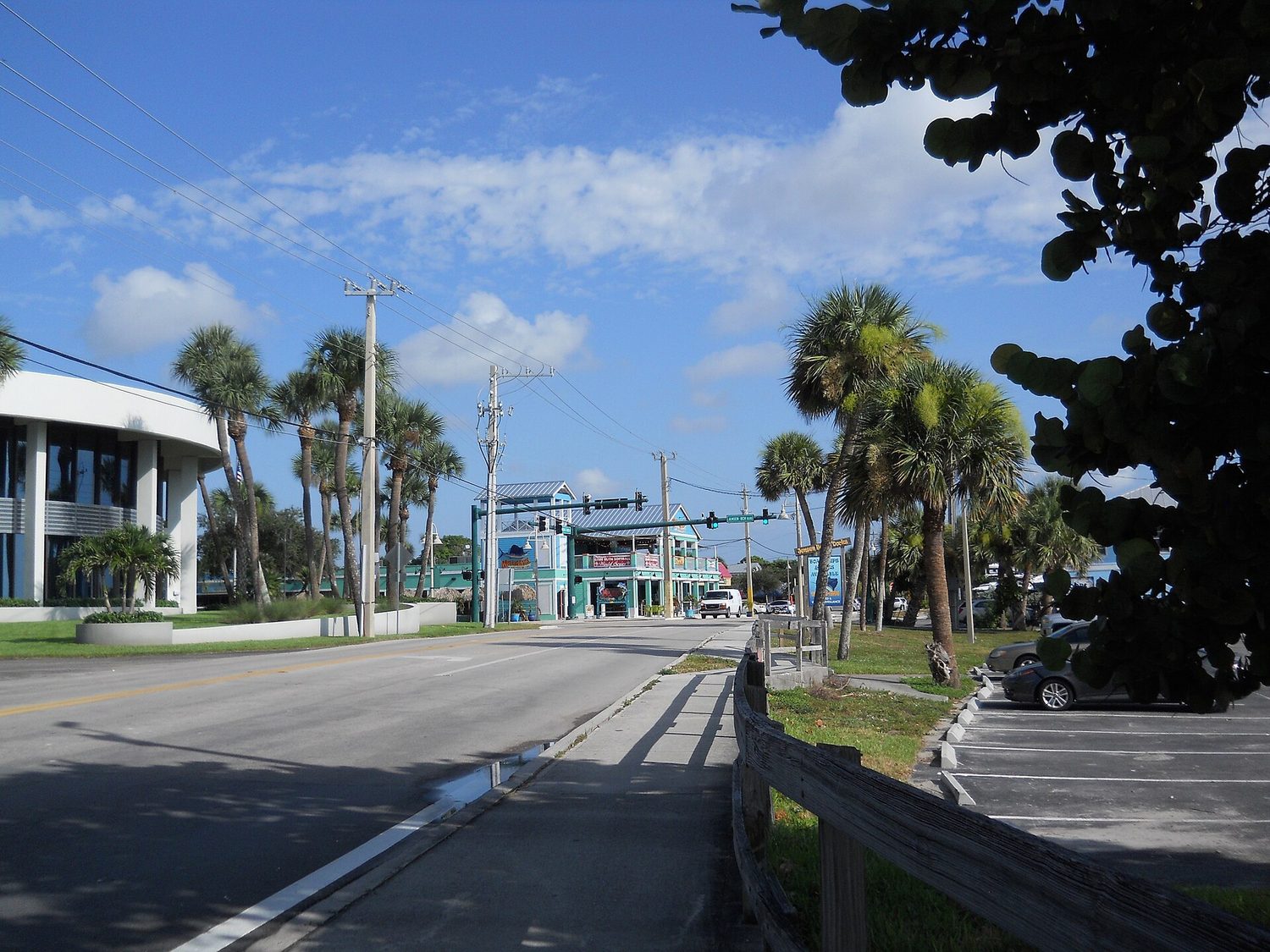
The Pineapple That Named a Town
John Laurence Jensen, a Danish immigrant, planted a pineapple plantation here in 1881, and the town grew from it. The town carries its founder's name—Jensen, the Dane who planted the first pineapples. By 1895, Jensen was called the Pineapple Capital of the World, shipping more than a million boxes a year in the June and July season. Then nothing. Severe freeze in 1895, fires in 1908 and 1910, and mounting debt finished the industry by 1920. The title faded into local memory, but the name stayed.
How the Railway Shaped Jensen Beach's Boom and Bust
The Florida East Coast Railway reached the town by 1894 and let growers load freight direct. That sounds like a triumph of infrastructure, and it was—briefly. The railway made the boom possible, speeding boxes to market. It also made the collapse faster: once the freeze hit and fires followed, growers had no buffer. The railway is a fact of infrastructure, not romance. It delivered pineapples in, and it delivered the industry's end just as efficiently.
After Pineapples: Jensen Beach's Shift to Citrus and Quiet Life
After pineapples failed, growers turned to citrus. The town's economy shifted, and the Pineapple Capital title became a historical footnote. Today you will not find pineapple fields here. You will find a residential community with a median age of 54.5 years, where the median home value is $363,100 and the median gross rent is $1,227. The town is not a resort; it is a place where people live, retire, and raise families—seasonal and permanent.
Turtles: The Living Inheritance
The living half of the story is at Jensen Sea Turtle Beach, a nesting ground for loggerhead, leatherback, and green sea turtles. Sections of the beach are barricaded through the nesting season, roughly May through October. The turtles return to the same fragile coast that once grew pineapples. The beach is not a spectacle; it is a working habitat. The barricades are not an inconvenience; they are the point.
Jensen Beach by the Numbers: A Residential Community, Not a Resort
The census tells the story plainly. Jensen Beach has 7,179 total housing units, of which 633 are held for seasonal or recreational use and 1,289 are vacant. The population is 12,456 people. The unemployment rate is 3.8 percent. Median household income is $63,397. Bachelor's degrees are held by 36.6 percent of residents. These are not tourist numbers. This is a town of houses, not hotels, shaped daily by the Indian River Lagoon along its eastern edge.
| Measure | Value |
|---|---|
| Population | 12,456 people |
| Median age | 54.5 years |
| Total housing units | 7,179 units |
| Homes held for seasonal or recreational use | 633 units |
| Vacant housing units | 1,289 units |
| Median home value | $363,100 |
| Median gross rent | $1,227 |
| Median household income | $63,397 |
| Bachelor's degree or higher | 36.6 percent |
| Unemployment rate | 3.8 percent |
What People Mistake for Jensen Beach
People confuse Jensen Beach with Stuart, which is 3 miles away and hosts the Stuart Boat Show. They assume a beach town must be a spring-break destination. It is not. They call it a "hidden gem," which is wrong twice: it is not hidden, and it is not a gem in the tourist sense. It is a specific place with a specific, bittersweet history. The pineapples are gone. The turtles remain. The name is a memorial to a crop that failed, attached to a coast that still works.
Why is it called Jensen Beach if there are no pineapples now? Because John Laurence Jensen planted them here in 1881, and the town never changed its name after the crop died. What happened to the pineapple industry? Freeze in 1895, fires in 1908 and 1910, and debt—finished by 1920. Is Jensen Beach a tourist destination? No; it is a residential community with 1,289 vacant housing units and a median age of 54.5. What is the town's character today? Retirement, seasonal homes, and working-class permanence. Where can I see sea turtles, and when? At Jensen Sea Turtle Beach, May through October, behind the barricades.
Common questions
- What happened to the pineapple industry in Jensen Beach?
- It collapsed. Jensen was the Pineapple Capital of the World by 1895, shipping over a million boxes a year. A severe freeze in 1895, fires in 1908 and 1910, and mounting debt finished it by 1920, after which growers turned to citrus.
- Is Jensen Beach named after someone?
- Yes, John Laurence Jensen, a Danish immigrant, planted a pineapple plantation here in 1881. The town grew from that plantation and carries his name.
- Can you see sea turtles in Jensen Beach?
- Yes, Jensen Sea Turtle Beach is a nesting ground for loggerhead, leatherback, and green sea turtles. Sections are barricaded through nesting season to protect them. The turtles are the living half of the town's story.
- What is the Indian River Lagoon like in Jensen Beach?
- It runs along the town's eastern edge. It's a key waterway for boating, fishing, and wildlife viewing, and it connects Jensen Beach to the broader coastal ecosystem.
- Is Jensen Beach a good place to live or just a vacation spot?
- It's a mix. Population is 12,456 with a median age of 54.5. Of 7,179 housing units, 633 are for seasonal or recreational use, and 1,289 are vacant. Median home value is $363,100, and median gross rent is $1,227. Unemployment is 3.8%.
- What can I do in Jensen Beach besides the beach?
- You can explore the Indian River Lagoon, visit the historical pineapple sites, or take a short trip to nearby Stuart (3 miles) for the Stuart Boat Show. Okeechobee (41 miles) has the Speckled Perch Festival and Parade.
Every business named above is one we hold a listing for, and every date traces to a source on our sources page. We do not describe menus, interiors or service we have not verified. Details change — confirm before you travel.